Why Facial Infections Spread to the Cavernous Sinus: The Venous Danger Zone
Overview
Infections originating on the face, especially around the nose and upper lip, may seem superficial, yet they can spread rapidly into the skull and produce life-threatening complications. The most feared of these is cavernous sinus thrombosis, a condition where bacteria track from the facial region into one of the major dural venous sinuses. This pathway is not random; it is rooted in the unique venous anatomy of the face, orbit, and cranium.
The Facial Veins: A Valveless System
Unlike most peripheral veins, the veins of the face lack valves, allowing blood to flow in either direction. This property is clinically important because it permits infections to migrate retrograde from the superficial facial region to deeper venous networks.
The facial vein, described in venous drainage of the face, drains the central face and communicates freely with deeper structures. Its most critical connection is with the angular vein at the medial canthus of the eye. The angular vein, in turn, communicates with the ophthalmic veins, which directly drain into the cavernous sinus.
Because these veins do not enforce one-way flow, increased pressure, such as from squeezing a pimple or manipulating an abscess, can reverse the direction of venous drainage, pushing infected material deep into the cranial venous system.
The “Danger Triangle” of the Face
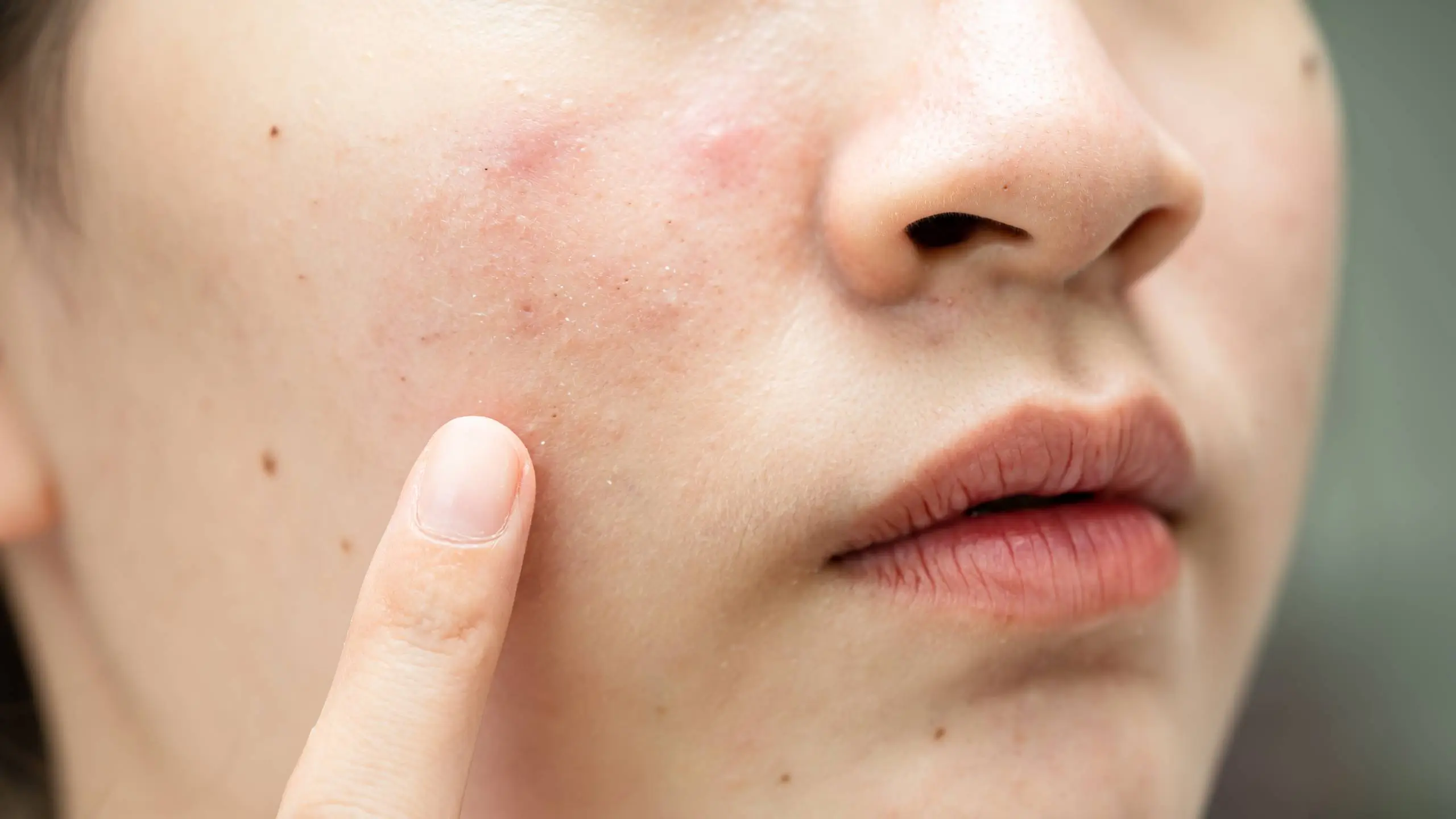
The region extending from the corners of the mouth to the bridge of the nose is often termed the danger triangle of the face. This is because infections originating here have the most direct access to intracranial venous pathways. The underlying reason is the convergence of veins between the facial vein, the ophthalmic veins, and the deeper pterygoid venous plexus located in the infratemporal fossa, detailed in the section on infratemporal fossa.
Infections entering the pterygoid plexus can move superiorly toward emissary veins that connect to the cavernous sinus, one of the most clinically significant venous sinuses outlined under intracranial dural venous sinuses.
Why the Cavernous Sinus Is Especially Vulnerable
The cavernous sinus is a trabeculated venous space situated on either side of the sella turcica. Several important structures run through it or in its lateral wall, including the internal carotid artery, oculomotor nerve (CN III), trochlear nerve (CN IV), ophthalmic and maxillary divisions of the trigeminal nerve (V1 and V2), and the abducens nerve (CN VI).
This anatomical density means that even a small infectious thrombus can quickly produce severe neurological deficits. Because the ophthalmic veins are valveless and directly connect the orbit to the cavernous sinus, infection from the medial face can enter the sinus with minimal resistance.
Venous Communication Pathways
Multiple venous pathways explain rapid intracranial spread from facial infections:
- Facial vein → angular vein → superior ophthalmic vein → cavernous sinus (a direct superficial route)
- Facial vein → deep facial vein → pterygoid venous plexus → emissary veins → cavernous sinus (a deep maxillary route)
Once infection reaches the cavernous sinus, its trabeculated interior slows venous flow, creating a favourable environment for thrombosis and bilateral spread because the right and left cavernous sinuses are interconnected.
Clinical Correlation
Symptoms of cavernous sinus involvement, such as painful ophthalmoplegia, chemosis, proptosis, and facial numbness, reflect involvement of cranial nerves and venous congestion within the orbit. Early recognition is critical because progression can be rapid and bilateral.
This anatomical pathway underscores why clinicians strongly advise against squeezing boils, pimples, or furuncles within the danger triangle of the face. The venous communications between the superficial facial veins and the cavernous sinus make it possible for a seemingly minor superficial infection to metastasize into the cranium with alarming speed.